
by Esme Addison
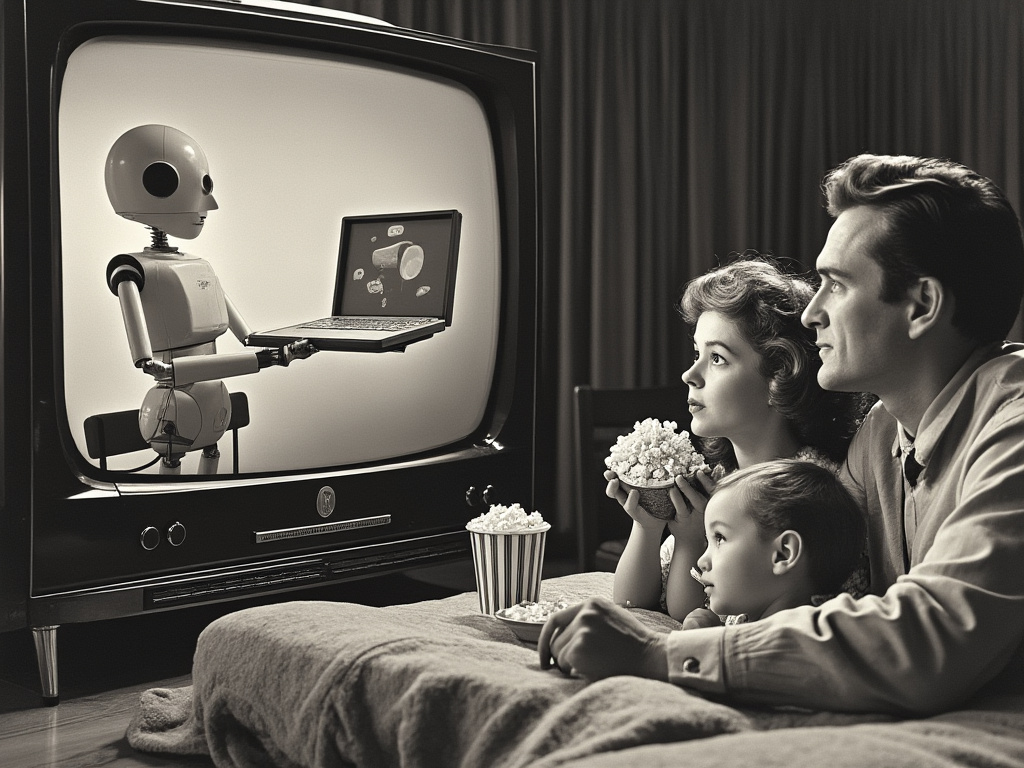
It’s not uncommon to find that the gadgets and innovations we marvel at today were once the stuff of science fiction. From smartphones to virtual reality, many of the technologies we now take for granted were first imagined in movies, television shows, and literature.
This phenomenon—where advanced technology is introduced to the public consciousness through media—has deep psychological roots, historical origins, and both positive and negative implications for society.
A Historical Overview
The practice of introducing advanced technology through media isn’t a modern concept; it dates back to the early 20th century. Science fiction writers like H.G. Wells and Jules Verne were pioneers in this regard, envisioning technologies that seemed fantastical at the time but would eventually become reality. For instance, Verne’s 1865 novel “From the Earth to the Moon” imagined a space journey long before space travel was possible.
In the mid-20th century, television and cinema became the primary platforms for introducing advanced technology to the masses. Shows like “Star Trek” (1966) introduced audiences to communicators that closely resemble modern-day smartphones, while “2001: A Space Odyssey” (1968) presented AI systems eerily similar to today’s voice assistants like Siri and Alexa. These media not only entertained but also laid the groundwork for how society would come to accept and eventually integrate these technologies into daily life.
Real-Life Spy Masks: Hollywood Didn’t Make This Up
Why Media Introduces Technology
The introduction of advanced technology through media can be understood through the psychological concept of “cultural priming.” Cultural priming suggests that repeated exposure to specific ideas, themes, or concepts in popular culture can shape public perception and readiness for future developments. When audiences see a particular technology repeatedly depicted in films or television, it becomes normalized, making it easier to accept when it eventually appears in reality.
This process is often intentional. Filmmakers, authors, and showrunners collaborate with technologists and scientists to create realistic depictions of future innovations. These depictions serve as a form of psychological conditioning, easing the public into the idea of new technologies by presenting them in familiar, entertaining contexts. The result is that when these technologies eventually become available, there is less resistance to their adoption.
Who Started It?
While it’s challenging to pinpoint a single individual who started this trend, several key figures have played significant roles in popularizing the practice. As mentioned earlier, authors like H.G. Wells and Jules Verne were among the first to use fiction as a platform to introduce advanced concepts. In the world of cinema, directors like Stanley Kubrick and Gene Roddenberry, the creator of “Star Trek,” were instrumental in showing audiences what the future could look like.
The military and defense sectors have also used media to introduce advanced technology. During the Cold War, for example, the U.S. government collaborated with filmmakers to create movies that depicted futuristic warfare technologies. These films served as both propaganda and a way to psychologically prepare the public for the potential realities of advanced military technology.
The next time you’re watching a scifi or fantasy tv show or movie, pay attention to the technology they’re using. Google it, and you may be surprised to find something very similar is already being researched or being used.
Here’s 15 advanced technologies that were first introduced in tv and movies.
- Tablet Computers:
Description: The PADD (Personal Access Display Device) used in Star Trek resembles modern-day tablet computers and e-readers.
- Introduced in Media: 1987 (Star Trek: The Next Generation)
- Introduced for Public Use: 2010 (Apple iPad)
2. Cell Phones:
Description: The communicators used by the crew of the USS Enterprise resemble early flip cell phones.
- Introduced in Media: 1966 (Star Trek)
- Introduced for Public Use: 1983 (Motorola DynaTAC 8000X)
3. Virtual Reality:
Description: The Holodeck, a virtual reality simulation room, inspired developments in virtual reality technology.
- Introduced in Media: 1987 (Star Trek: The Next Generation)
- Introduced for Public Use: 2016 (Oculus Rift)
4. Video Calls:
Description: Video calls between Dr. Floyd and his family resemble modern video conferencing technology like Skype or Zoom.
- Introduced in Media: 1968 (2001: A Space Odyssey)
- Introduced for Public Use: 2003 (Skype)
5. Voice Assistants:
Description: The ship’s computer responded to voice commands, similar to modern voice assistants like Siri and Alexa.
- Introduced in Media: 1966 (Star Trek)
- Introduced for Public Use: 2011 (Apple Siri)
5. Smartwatches:
Description: Dick Tracy’s two-way wrist radio/watch anticipated today’s smartwatches with communication capabilities.
- Introduced in Media: 1946 (Dick Tracy)
- Introduced for Public Use: 2015 (Apple Watch)
7. Augmented Reality:
Description: The film featured gesture-controlled interfaces and displays that resemble today’s augmented reality technology.
8. Robotic Prosthetics:
Description: Luke Skywalker’s robotic hand has parallels to modern advancements in prosthetic limbs.
- Introduced in Media: 1980 (Star Wars: The Empire Strikes Back)
- Introduced for Public Use: 2014 (DARPA’s DEKA Arm)
9. Smart Homes:
Description: The show depicted automated homes with features like robotic vacuum cleaners and smart appliances.
- Introduced in Media: 1962 (The Jetsons)
- Introduced for Public Use: 2002 (iRobot Roomba)
10. Hoverboards:
Description: The hoverboard from the film inspired real-life attempts to create personal hovercraft devices.
- Introduced in Media: 1989 (Back to the Future Part II)
- Introduced for Public Use: 2015 (Lexus Hoverboard)
11. Self-Driving Cars:
Description: Autonomous taxis in the movie resemble current developments in self-driving car technology.
- Introduced in Media: 1990 (Total Recall)
- Introduced for Public Use: 2021 (Waymo’s Public Service in Arizona)
12. 3D Printing:
Description: The replicator, which could create objects on demand, is a precursor to 3D printing technology.
- Introduced in Media: 1987 (Star Trek: The Next Generation)
- Introduced for Public Use: 1992 (Stratasys 3D Printer)
13. Biometrics:
Description: The film showcased iris recognition technology, similar to modern biometric security systems.
Introduced in Media: 1982 (Blade Runner)
- Introduced for Public Use: 2001 (Iris Recognition at Airports)
14. Bionic Exoskeletons:
Description: The Power Loader exosuit inspired real-world development of exoskeletons for lifting and mobility assistance.
- Introduced in Media: 1986 (Aliens)
- Introduced for Public Use: 2010 (Sarcos XOS Exoskeleton)
15. Artificial Intelligence:
Description: The Maschinenmensch (Machine-Person) was one of the first depictions of a humanoid robot with AI, foreshadowing modern AI developments.
- Introduced in Media: 1927 (Metropolis)
- Introduced for Public Use: 2011 (IBM Watson Jeopardy!)
About The Author

Esme Addison
…is the author of An Intrigue Of Witches.The first book in the scifi-fantasy mystery series, The Secret Society Mysteries follows a historian as she unravels the lies America has been told about their founding.
 The Speculative South