
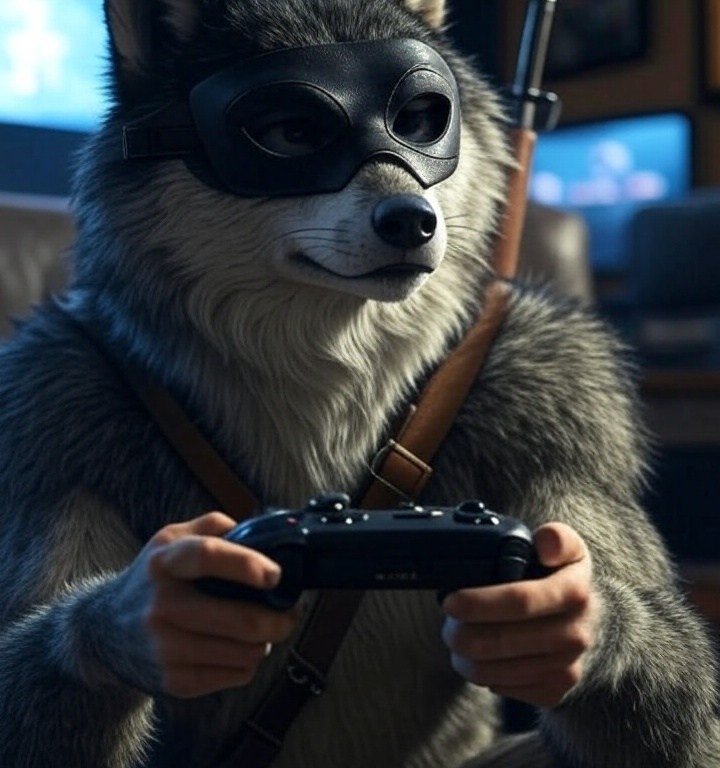
We’ve all heard the phrase lone gunman. One frustrated, angry individual, isolated, snapping in a moment of rage. A real lone wolf, right?
Media reports it, officials repeat it, and somehow we’re meant to accept it without question. But anyone paying attention knows it doesn’t add up.
Assassination isn’t just the act of a single unstable person. It’s a political tool, a way to silence dissent, shift power, or send a message. Yet the story persists because it’s easier to digest than the truth — one person to blame, one tidy narrative, and the networks and enablers behind the act fade into the background.
Across history, from Lincoln to JFK, MLK to Reagan, Sandy Hook, and recent events involving Charlie Kirk and Thomas Crooks, a pattern emerges. The lone gunman is rarely alone. Security oddities, radicalization, enabling circumstances, and political context play crucial roles, but these details are often minimized or ignored. The story we’re told keeps us looking at the shooter, while the forces that made the act possible remain invisible.
What Makes A Lone Gunman?
Here are the traits that media and officials often highlight when constructing the lone gunman narrative:
- Isolation or pronounced loner tendencies
- Limited personal connections or social circles
- Obsessive or unusual interests, often extremist or political
- Expressed grievances, anger, or perceived vendettas
- History of mental health struggles or instability
- Criminal background or prior brushes with law enforcement
- Radicalization through online communities or ideological networks
- High skill or precision in executing acts of violence
- Manifestos, recordings, or statements explaining motives
- Exploitation of systemic gaps, lapses in security, or other circumstantial advantages
It’s so ingrained in our culture—repeated in TV and film, tossed around on the news—that you can’t help but wonder if a team of behavioral scientists didn’t actually create the profile, in the same way they created the term ‘conspiracy theorist’ during the JFK investigation.
In 1967, the CIA circulated a memo (Document 1035-960) advising employees on strategies to counter criticism of the Warren Commission’s findings. The memo suggested using the term to dismiss anyone questioning the official narrative, shaping public perception for decades. Since then, the label has taken on a life of its own. It shows up in cable news segments, morning shows, opinion columns, podcasts, YouTube videos, and late-night comedy—often without context or explanation.
It’s used to instantly discredit anyone raising questions, whether about government actions, corporate behavior, or controversial events. Over time, ‘conspiracy theorist’ has become a catch-all phrase that signals dismissal, shutting down inquiry and shaping how generations of viewers approach information—before they even think to ask the hard questions.
The Lone Gunman Profile pop up repeatedly in reports and coverage. Convenient, almost formulaic. But they don’t prove that the individual acted entirely alone. They’re shorthand, a way to discourage deeper inquiry: Who influenced this person? Who enabled them? Who stood to gain?
John Wilkes Booth: The OG Lone Gunman
The Lone Gunman Profile has been used for a very, very long time. It would appear that back in the early 19th century, Americans were easier to fool with a compelling story. Take John Wilkes Booth for example. We learn about him in school, and they pretty much say he was a lone gunmen but if you do a little research you’ll find he was one cog in a larger machine.
Booth was part of a network of Confederate sympathizers and co-conspirators who plotted not just Lincoln’s assassination but also the attempted killings of Vice President Andrew Johnson and Secretary of State William Seward. The plan was meant to throw the Union government into chaos and give the Confederacy a final chance to strike.
Booth didn’t act in isolation. Co-conspirators like Lewis Powell, George Atzerodt, and David Herold each had specific roles in the plan, from stabbing Seward to guarding escape routes. Several of them were caught, tried, and executed, which shows there was accountability—but the “lone gunman” label stuck firmly to Booth himself. Even then, authorities simplified the story for public consumption, making it easier to frame a single villain rather than a sprawling conspiracy.
There’s also an interesting layer of performance to the story. Booth was a well-known actor, and his theatrical skills made him an ideal figure to cast in the lone gunman narrative. He could play the part, literally and figuratively, of the solitary, tragic villain. That element—the careful selection of someone who can perform a role convincingly—is something that reverberates through history. Today, we see similar tactics in politics and public life, where individuals are elevated or positioned to play roles that serve a broader strategy or narrative, often masking the networks and planning behind them.
Booth’s assassination of Lincoln set a precedent for how history is packaged: the public is given a simple, digestible story, while the more complicated truths—the networks, the political motives, the planning—are buried or glossed over. The lone gunman story, which we can now see is a template… is less about the individual and more about controlling the narrative.
Historical Cases & The Lone Gunman Narrative
Here are few more examples of the Lone Gunmen template at work.
- James A. Garfield – Charles Guiteau (1881): Guiteau is often labeled a delusional, frustrated office-seeker acting alone, but letters and political correspondence suggest broader influences and failures in presidential protection.
- William McKinley – Leon Czolgosz (1901): Framed as a solitary anarchist, Czolgosz’s participation in ideological networks hints at support or reinforcement beyond himself.
- John F. Kennedy – Lee Harvey Oswald (1963): Oswald is the classic example of a lone gunman, yet his affiliations, movements, and the controversial Warren Commission report leave plenty of room for doubt.
- Martin Luther King Jr. – James Earl Ray (1968): Ray’s narrative was challenged in a civil suit by the King family, which concluded there was evidence suggesting outside influence. Systemic gaps, inconsistencies, and potential networks complicate the lone gunman story.
- Ronald Reagan – John Hinckley Jr. (1981): Portrayed as obsessed and acting alone, Hinckley’s meticulous planning and cultural fixations raise questions about external enabling factors.
- Sandy Hook Elementary – Adam Lanza (2012): Lanza’s story was framed as an isolated, troubled individual. But structural, familial, and social dynamics were heavily involved, showing that the lone gunman label oversimplifies reality.
- Charlie Kirk event – Tyler Robinson (2023): Robinson’s narrative is full of inconsistencies. Questions remain: how did he access the roof unnoticed, who was he communicating with on Discord, who influenced or radicalized him? Odd behavior by Kirk’s security team and crowd members fuels skepticism, and his marksmanship indicates skill far beyond a random, untrained individual.
- Presidential attack – Thomas Crooks (2024): Crooks’ precision and apparent planning suggest external influence. Combined with unusual behavior from nearby crowd members, the lone gunman story doesn’t fully explain what happened.
School Shootings: Beyond the Lone Gunman Script
When it comes to school shootings, the media often casts the perpetrator in a version of the Lone Gunman mold we’ve seen for decades—but updated for a younger, more modern context. He’s usually a young, white male, described as solitary, troubled, frustrated, acting out. Reports often mention therapy, medication, personal struggles, or even video game use, as if that explains everything.
In many ways, the school shooter is simply the modern evolution of the Lone Gunman template, a continuation of a story we’ve been told for generations.
How The Media Frames The Story
Whether its a school shooter or a political assassination, the media framing used to be subtle. Now it’s blatant – in your face. From JFK and MLK to modern cases, coverage is designed to simplify, to make it digestible.
Headlines focus on the shooter’s background, mental state, and “loner” tendencies. This framing diverts attention from outside influence and political context. By repeatedly telling us the same story, the media teaches us not to ask hard questions: Why did security behave oddly? Why were intelligence gaps ignored? Why were enablers present but never investigated? In this way, the lone gunman narrative becomes a tool of convenience — for authorities, the media, and those with power to shape the story.
Security Oddities & Systemic Weaknesses
Across presidential events, public appearances, and mass shootings, security anomalies make a significant difference. Odd behavior from security personnel, inconsistencies in crowd management, and lapses in planning often allow access that seems impossible for a lone individual. These details vanish when coverage focuses exclusively on the shooter, reinforcing the illusion of an isolated act.
Psychology vs. Politics
Public narratives usually emphasize psychology — mental health issues, anger, obsession, even political frustrations — as the primary explanation for violent acts. But planning, political context, and outside influence are just as important. Assassination is rarely random, and though we’re told it’s the work of the average citizen, history shows it’s often a tool of regime change. Most young men aren’t exactly lining up to rewrite governments, are they?
We’re asked to suspend disbelief and accept that a young man, often fresh out of college, decided on his own to target a political activist or leader. The Lone Gunman story insists on a tidy explanation: one man, acting alone. That simplicity masks networks, hidden motives, and systemic enablers that both history and modern analysis make clear.
Social Media & The Modern Lens
In today’s age of social media, it’s harder to uphold the lone gunman narrative. Citizen footage, online reporting, and real-time discussion reveal inconsistencies and highlight anomalies previously invisible. Yet the story persists because it’s easier for society to swallow than the messy truth. Digital scrutiny exposes cracks, inviting the questions we should have asked from the start.
Across history — from Lincoln and Garfield to JFK, MLK, Reagan, Sandy Hook, Tyler Robinson, and Thomas Crooks — the pattern repeats. Convenient, tidy, digestible. But the closer you look, the lone gunman is rarely alone. Networks, planning, and political context matter. Security oddities, radicalization, and enabling circumstances are not details to be ignored; they’re central to understanding the act.
When these tragedies occur, the conversation should focus less on the person holding the gun and more on those who enabled, planned, or benefited from the act. The lone gunman is often a cover story, designed to satisfy our need for simplicity while hiding the forces that orchestrated the violence. History and modern scrutiny tell a different story — one we need to see clearly.
 The Speculative South